THE NARRATIVE
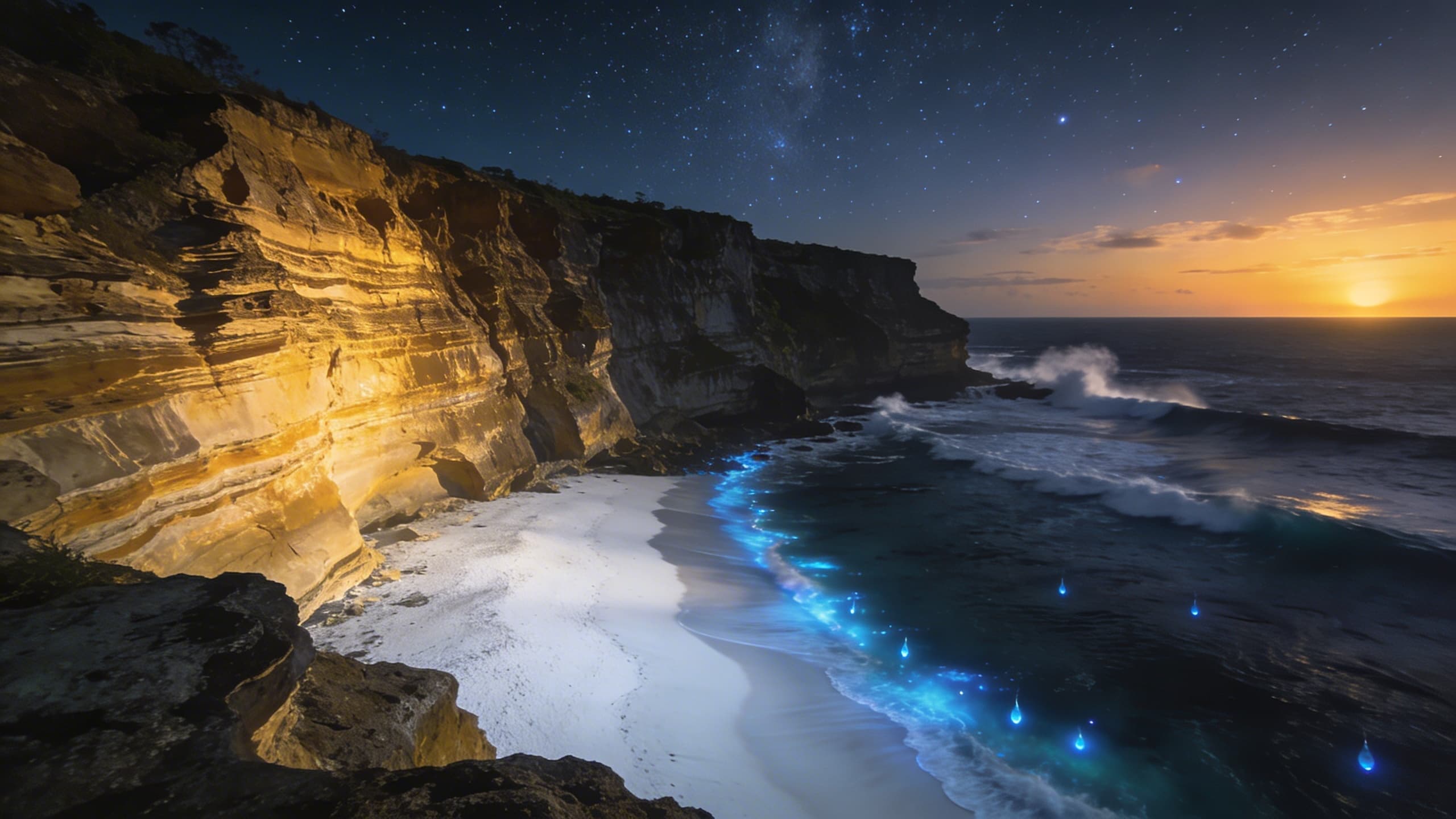
Tusan Cliff Beach is a dramatic coastal spectacle where towering sandstone cliffs plunge into the South China Sea, creating one of the most visually striking beach landscapes in all of Sarawak and Borneo. The eroded cliff faces glow golden-orange at sunset, framing a wide stretch of pale sand that extends for kilometres in both directions. But the true magic of this Sarawak beach happens after dark, when the legendary Blue Tears phenomenon transforms the breaking waves into an electric-blue bioluminescent display caused by Noctiluca scintillans plankton. This rare natural light show, occurring primarily between June and October on moonless nights, has made Tusan one of the most sought-after hidden gem beach destinations in all of Southeast Asia. Located approximately one hour south of Miri near the small town of Bekenu, the beach remains refreshingly undeveloped, preserving the wild and untamed character that makes it so compelling. At low tide, rock pools teem with marine life, and the cliff-top viewpoint offers sweeping panoramic views across the sea.
HERITAGE & HISTORY
Tusan Cliff Beach sits along a stretch of the Sarawak coastline where ancient sedimentary layers have been exposed and sculpted by millennia of relentless wave action and tropical weathering. The sandstone cliffs, rising approximately 20 metres above the beach, are composed of geological formations dating back millions of years, and their ongoing erosion creates ever-changing sculptural forms that have drawn comparisons to the Twelve Apostles of Australia and the Algarve cliffs of Portugal. This is one of the most geologically fascinating Sarawak beach destinations and a must-visit for anyone exploring Borneo's coastline. The Blue Tears phenomenon that has made Tusan internationally famous is caused by bioluminescent dinoflagellates, specifically Noctiluca scintillans, a type of plankton that emits blue light when disturbed by wave energy. When conditions align -- warm water temperatures, dark moonless nights, and specific current patterns during the monsoon transition months of June to October -- the waves along the entire beach glow an ethereal electric blue. This is one of only a handful of locations on Earth where this phenomenon occurs with such intensity, placing Tusan alongside the bioluminescent bays of Puerto Rico and the Maldives. The beach is located about 40 kilometres south of Miri city, accessible via a paved road through Bekenu. Despite growing fame, the area remains largely undeveloped with only basic facilities, which is part of its charm. The dramatic sunset views from the cliff top have made this a pilgrimage site for photographers from across Malaysia and beyond. Visitors should exercise caution near the cliff edges, as the soft sandstone is prone to sudden collapse. For Blue Tears viewing, check the lunar calendar and aim for the darkest nights. Bring a tripod for long-exposure photography and a torch for navigating the dark beach. Tusan Cliff Beach represents the raw, untamed beauty of Sarawak's coast -- a hidden gem Borneo beach where nature puts on a show unlike anywhere else.