THE NARRATIVE
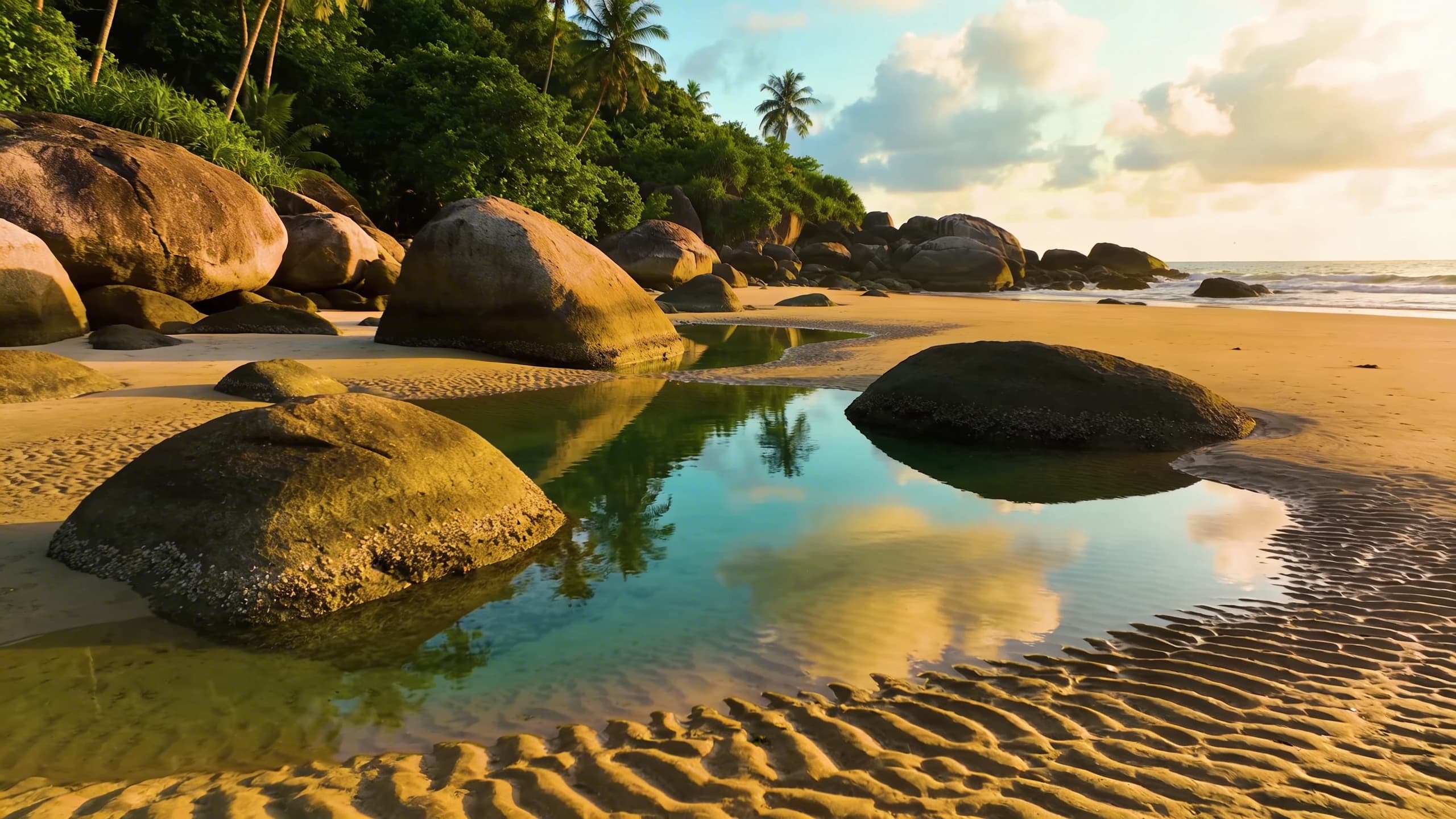
Pandan Beach in Lundu is a characterful Sarawak beach destination where large weathered boulders, scattered shells, and clear shallow water create a naturally beautiful and family-friendly coastal environment. Located near the western coast of Sarawak approximately 90 kilometres from Kuching, this Borneo beach offers a distinctive landscape quite different from the typical palm-fringed tropical postcard scene. Giant granite boulders dot the shoreline and shallow waters, smoothed by centuries of wave action into sculptural forms that invite climbing, exploring, and photography. The rocky foreshore gives way to patches of clean sand between the boulders, and the water is remarkably clear, with visibility often extending several metres. Children love scrambling over the rocks and investigating the tide pools that form at low tide, filled with small crabs, hermit crabs, and colourful sea snails. The beach is backed by a scenic stretch of rocky coastline where pandanus palms (from which the beach takes its name) cling to the shore alongside other coastal vegetation. There are basic facilities including sheltered pavilions and a small car park. Pandan Beach offers a more textured, interesting beach experience than a simple sand strip, and its proximity to Gunung Gading National Park makes it an excellent addition to a Lundu day trip from Kuching.
HERITAGE & HISTORY
Pandan Beach takes its name from the pandanus palms (screwpine) that grow abundantly along this stretch of the Lundu coastline, their distinctive aerial roots and long spiky leaves creating a characterful coastal vegetation fringe. The beach sits along a section of the western Sarawak coast where the geological substrate transitions from the soft sedimentary formations of the lowlands to harder granite and metamorphic rocks associated with the Pueh-Lundu mountain range. This geological mix is what gives Pandan Beach its distinctive character -- the large granite boulders scattered across the beach and shallow water were deposited by ancient river systems and subsequently shaped by millennia of wave erosion. The Lundu district has a rich cultural heritage, with Bidayuh communities inhabiting the inland valleys and Malay fishing communities along the coast. The coastal villages near Pandan Beach have traditionally relied on fishing and small-scale farming, and the waters off this stretch of coast are still fished by small boats using traditional methods. The area's relative underdevelopment for tourism has preserved both its natural beauty and its cultural authenticity. Pandan Beach is located near the entrance to Gunung Gading National Park, one of Sarawak's most important conservation areas and the best place in Borneo to see the giant Rafflesia flower in bloom. This proximity makes the beach a natural complement to a national park visit -- many visitors combine a morning jungle trek to see Rafflesia with an afternoon of relaxation at Pandan Beach. The drive from Kuching to Lundu takes approximately 90 minutes on good roads. The beach is a must-visit Sarawak beach destination for families and nature lovers who appreciate the aesthetic interest of a boulder-strewn shoreline over a conventional sand beach. The rocky terrain supports greater marine biodiversity than sandy shores, making the tide pools here particularly rewarding to explore. Bring water shoes for comfortable walking on the rocks, and allow time to wander and discover the natural sculptures that make Pandan Beach a hidden gem of the Borneo coast.