THE NARRATIVE
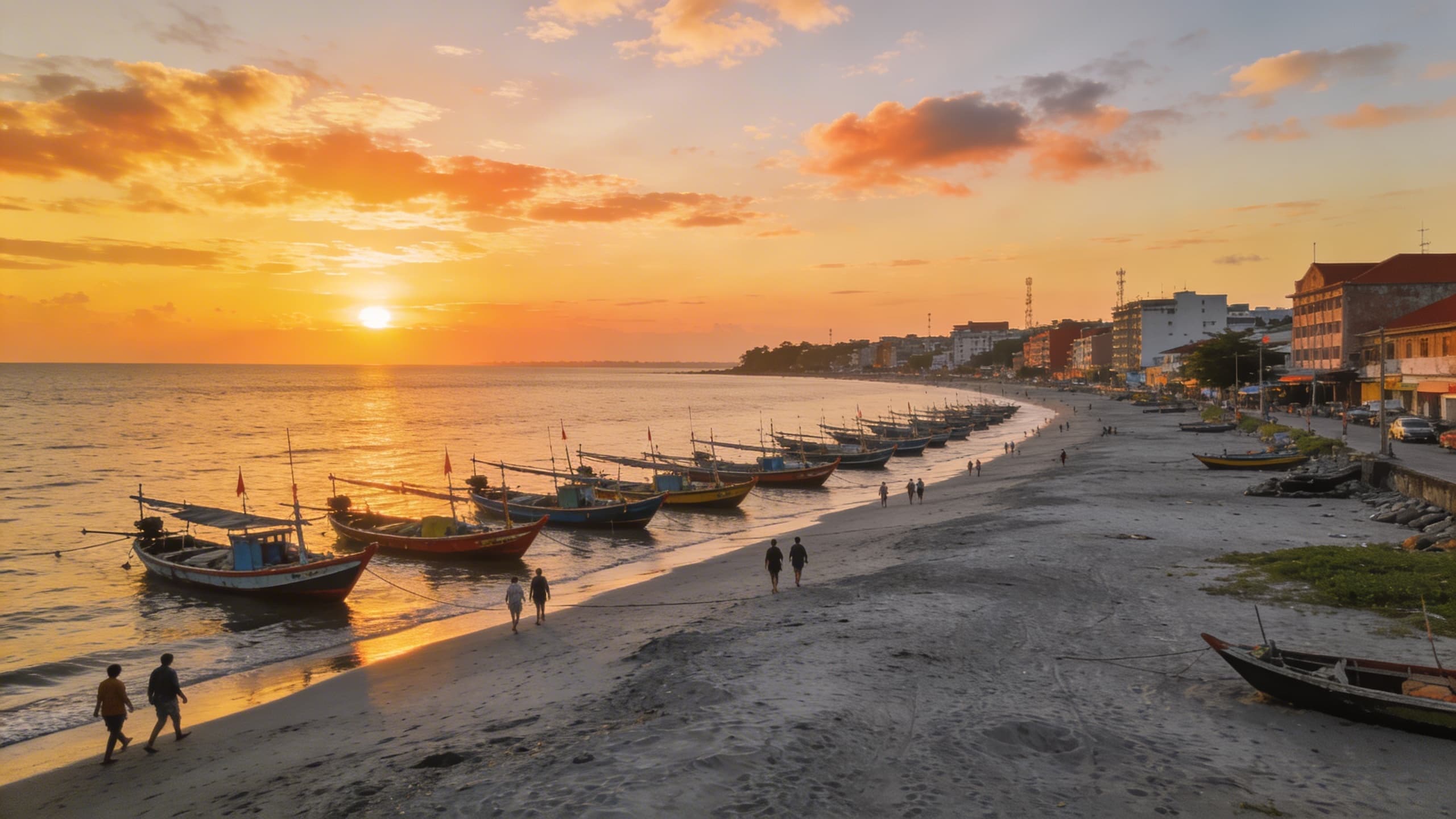
Lutong Beach is an expansive urban beach on the northern outskirts of Miri, where a wide stretch of grey-tinged sand meets the South China Sea alongside the historic oil town of Lutong. This accessible Sarawak beach offers a distinctly different atmosphere from Miri's more groomed southern beaches, with a raw, industrial-meets-coastal aesthetic defined by the presence of colourful fishing boats, the Lutong waterfront, and the open horizon of the South China Sea stretching endlessly to the north and west. The beach is broad and spacious, with the grey sand creating a moody, atmospheric canvas that is particularly photogenic during overcast skies and dramatic weather. Local residents use the beach for evening strolls, fishing, and casual socialising, and there is a comfortable informality to the scene that feels authentically Bornean. The nearby Lutong town, originally established as an oil company settlement in the early 20th century, adds historical interest to any visit. Fishing boats in various states of paint and repair line sections of the waterfront, and the adjacent fish market is a bustling early-morning attraction. Lutong Beach may not be a conventional tropical postcard, but it offers a genuine and characterful slice of Miri's coastal identity that rewards visitors who appreciate atmosphere over aesthetics.
HERITAGE & HISTORY
Lutong holds a special place in Sarawak's modern history as one of the key settlements of the petroleum industry that transformed northern Borneo. The town grew up around the oil operations that began in Miri in 1910 when Malaysia's first productive oil well was drilled at nearby Canada Hill. Lutong became the administrative and residential hub for the Shell oil company's workforce, and its grid-pattern streets, company housing, and waterfront facilities reflect this planned company-town origin. The beach at Lutong was always part of the town's recreational landscape, providing the oil workers and their families with a coastal outlet within walking distance of their homes. The grey sand that characterises Lutong Beach comes from the specific geological composition of the sediment sources along this section of the Sarawak coast, where river-borne material from the interior mixes with marine sediments. While less conventionally attractive than the white sand found on more tropical beaches, the grey sand has a dramatic, moody quality that creates atmospheric photographs, particularly during the golden hour and under stormy skies. Lutong's waterfront remains an active fishing harbour, and the daily landing of boats creates a lively scene that connects the modern town to its pre-oil maritime heritage. The fish market near the beach is one of the best in the Miri area, offering fresh catches at wholesale prices in the early morning hours. Lutong Beach is located approximately 15 minutes north of Miri city centre and is easily accessible by car or local transport. While it lacks the recreational facilities of Miri's more developed southern beaches, it compensates with genuine character and historical interest. The beach is a must-visit for anyone interested in the intersection of Sarawak's industrial heritage and coastal culture. Combine a visit with a walk through Lutong's old town streets for a fascinating glimpse into the history that built modern Miri.